
The 2026 Subaru Trailseeker is a five-door, five-passenger battery-electric SUV designed around a dual-motor electric drivetrain and Subaru's Symmetrical All-Wheel Drive system. Its engineering combines independent front and rear electric motors, a lithium-ion battery pack, and the Subaru e-Global Platform to create a dedicated electric vehicle architecture. The 2026 Subaru Trailseeker also incorporates traction management technologies, independent suspension, regenerative braking, and utility-focused dimensions that support passenger and cargo flexibility. Published specifications cover power output, battery capacity, charging capability, chassis design, wheel and tire configurations, and interior packaging. These characteristics define the 2026 Subaru Trailseeker as an electric SUV with a strong emphasis on control, versatility, and efficient packaging.
Interior Space and Passenger Accommodations
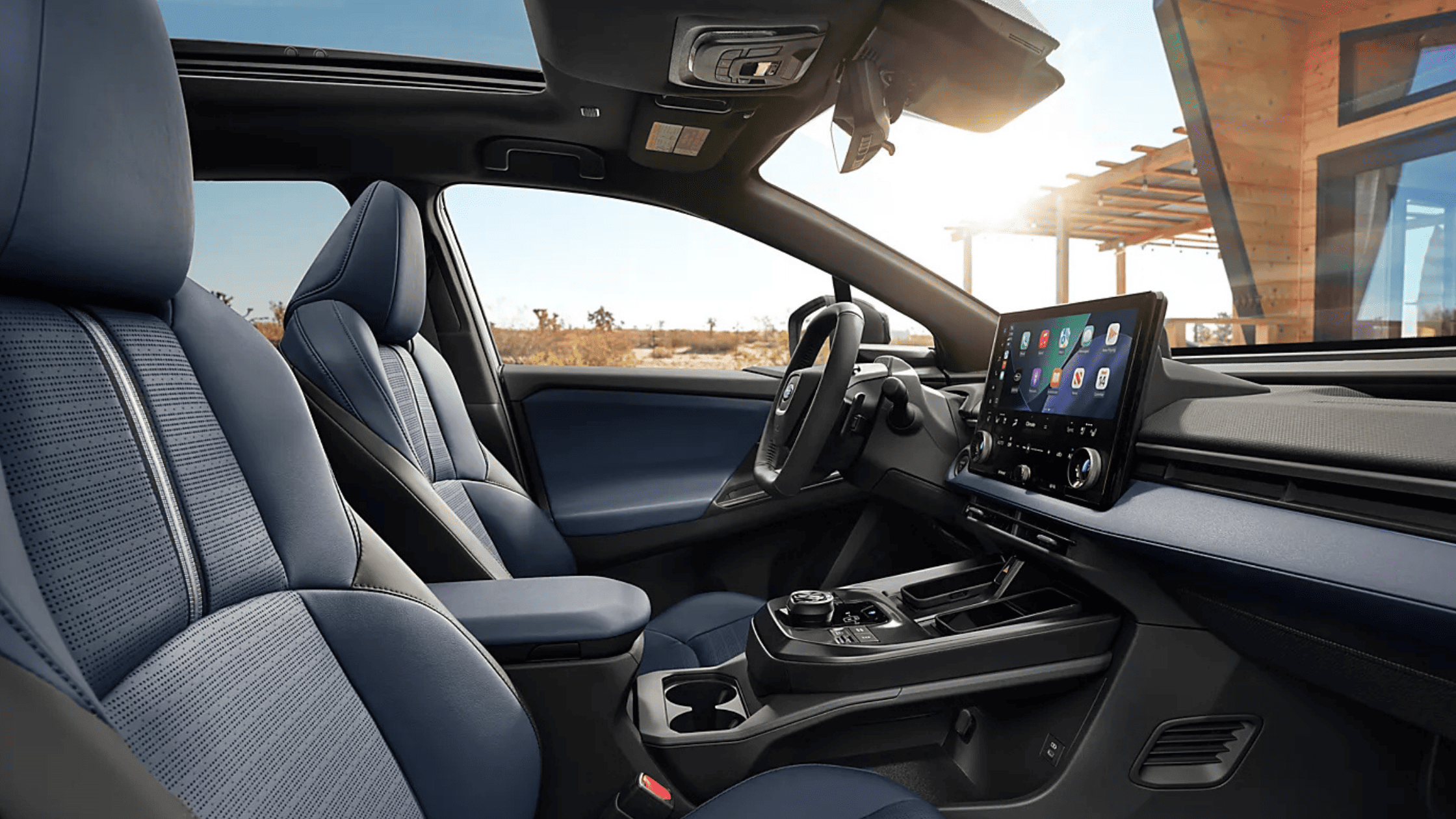
The 2026 Subaru Trailseeker provides seating for five occupants and publishes detailed measurements for front and rear passengers. Front and rear legroom measure 42.1 inches and 35.3 inches, respectively. Hip room measures 54.4 inches in the front and 46.2 inches in the rear, while shoulder room measures 58.0 inches and 55.0 inches. Headroom measurements vary according to roof configuration. These dimensions establish the interior packaging available within the 2026 Subaru Trailseeker cabin.
Passenger Volume and Headroom Measurements
EPA passenger volume measures 97.5 cubic feet in configurations without a moonroof. Models equipped with a moonroof provide 96.2 cubic feet of passenger volume. Headroom measurements are listed at 38.8 inches in front and 38.6 inches in the rear in one configuration. Vehicles equipped with a moonroof provide 38.0 inches of front headroom and 37.1 inches of rear headroom. These figures provide a detailed view of available occupant space. The measurements help define the cabin dimensions of the 2026 Subaru Trailseeker.
Cargo Area Functionality
Cargo specifications highlight the utility capabilities of the 2026 Subaru Trailseeker. Cargo volume behind the rear seatbacks measures 31.3 cubic feet, while models with a panoramic roof provide 30.4 cubic feet. Folding the rear seatbacks increases capacity to 74.0 cubic feet, or 71.8 cubic feet with a panoramic roof. These measurements indicate the flexibility available for carrying larger items. The cargo area dimensions complement the overall SUV packaging.
Cargo Measurements and Load Space
The rear cargo opening width measures 42.3 inches. Maximum cargo length reaches 47.0 inches with the rear seatbacks in place and extends to 75.0 inches with the seatbacks folded. Cargo area height measures 33.6 inches with the luggage compartment deck board in the upper position. Lowering the deck board increases cargo height to 36.5 inches. These specifications provide a detailed overview of the available load space and cargo versatility of the 2026 Subaru Trailseeker.

Electric Powertrain and Battery System
The 2026 Subaru Trailseeker uses an all-electric drivetrain that incorporates front and rear AC synchronous permanent-magnet motors. Each motor works with an integral transaxle and power inverter, creating a dual-motor arrangement that supports all-wheel-drive operation. Combined output measures 375 horsepower, with each motor rated at 167 kW. The independent motor design allows electronic management of front and rear power delivery. This configuration contributes to the vehicle's balanced drivetrain layout and supports the operation of its Symmetrical All-Wheel Drive system.
Lithium-Ion Battery Configuration
The 2026 Subaru Trailseeker uses a lithium-ion battery pack containing 104 cells and providing a capacity of 74.7 kWh. The battery operates with a rated voltage of 391 volts and a rated capacity of 191 Ah. Subaru equips the system with battery cooling and heating functions to help manage operating temperatures. These systems form an important part of the vehicle's electrical architecture and support battery operation during different driving and charging conditions. The battery specifications also establish the foundation for the model's published driving range figures.
Charging Capability and Driving Range
The 2026 Subaru Trailseeker features a North American Charging Standard charge inlet positioned on the right fender. The charging system supports DC fast charging, allowing the battery to charge from 10 percent to 80 percent in as little as 28 minutes. Subaru publishes EPA-estimated range figures of 281 miles for the Premium model and 274 miles for Limited and Touring models. These ratings provide clear distinctions between trim levels while maintaining a common battery design. The combination of charging capability and range figures supports the vehicle's function as a battery-electric SUV designed for everyday use.
Disclaimer: Charge time varies based on vehicle level of charge, charging rate, ambient temperature, and many other factors.
Symmetrical All-Wheel Drive and Traction Management
The 2026 Subaru Trailseeker employs Symmetrical All-Wheel Drive with electronic power-controlled variable power distribution. Independent front and rear electric motors manage torque delivery between the axles. This configuration allows the system to distribute power electronically rather than through conventional mechanical methods. The all-wheel-drive system works alongside several traction and stability technologies intended to enhance vehicle control. Together, these systems contribute to the handling characteristics and operational capability of the 2026 Subaru Trailseeker.
X-MODE® and Driver Assistance Functions
The 2026 Subaru Trailseeker includes X-MODE® with Snow/Dirt and Deep Snow/Mud settings. These selectable modes support traction management in changing surface conditions by adjusting vehicle responses. Grip Control provides additional assistance during low-speed operation. Downhill Assist Control helps maintain control on descents by managing vehicle speed. Hill-Start Assist contributes to smoother starts when the vehicle begins moving on an incline.
Stability and Cornering Systems
Vehicle Dynamics Control with all-wheel, all-speed traction control is included as part of the electronic stability systems of the 2026 Subaru Trailseeker. Subaru also integrates Active Cornering Assist to support vehicle behavior during directional changes. These systems operate together to manage traction and maintain stability under varying conditions. Their functions complement the electric all-wheel-drive layout and contribute to consistent vehicle responses. The combination of these technologies reinforces the emphasis of the 2026 Subaru Trailseeker on controlled operation.
Chassis Construction and Suspension Design
The 2026 Subaru Trailseeker uses the Subaru e-Global Platform and features unitized body construction. This platform serves as the structural foundation for the battery-electric SUV and supports the integration of the drivetrain and suspension systems. Subaru pairs the platform with a four-wheel independent suspension layout to provide controlled wheel movement at each corner. Steering and braking systems are also integrated into the platform architecture. Together, these components create a cohesive chassis package.
Front and Rear Suspension Components
The front suspension uses MacPherson®-type struts equipped with internal rebound springs. Additional front suspension components include lower L-arms, coil springs, and a stabilizer bar. The rear suspension employs a double-wishbone arrangement with coil springs and dampers containing internal rebound springs. Steel lower arms with aerodynamic covers are also incorporated at the rear, along with a stabilizer bar. This combination creates a fully independent suspension system designed to manage ride motions and wheel control.
Steering Characteristics
The 2026 Subaru Trailseeker uses a quick-ratio electric power-assisted rack-and-pinion steering system. The steering ratio measures 14.2:1, and the system requires 2.8 turns from lock to lock. Subaru lists a turning circle of 36.7 feet. These specifications provide measurable information about the steering system and vehicle maneuverability. The steering configuration complements the chassis and suspension design while supporting driver control.
Braking Systems and Regenerative Functions
The 2026 Subaru Trailseeker uses an electronically controlled power-assisted braking system with four-wheel disc brakes. Subaru equips the system with a four-channel, four-sensor ABS along with Brake Assist and Brake Override functions. These technologies contribute to braking management and support vehicle control during various driving situations. The braking system integrates with the vehicle's electronic architecture and works alongside the traction and stability systems. This arrangement creates a comprehensive approach to vehicle control.
Disc Brake Hardware
Front brake components consist of 12.9-inch ventilated rotors with dual-piston calipers. Rear brake assemblies use 12.5-inch ventilated rotors paired with single-piston calipers. The ventilated design supports heat management during operation. Brake dimensions are clearly defined for both front and rear systems. These components provide the hardware foundation for the braking capability of the 2026 Subaru Trailseeker.
Regenerative Braking Operation
Subaru equips the 2026 Subaru Trailseeker with a Regenerative Braking System featuring four driver-controlled modes. Drivers adjust these settings through steering wheel paddle switches. The regenerative system works in conjunction with the conventional braking components. This design provides multiple levels of regenerative operation based on driver preference. The system forms part of the vehicle's broader electric powertrain strategy.
Exterior Dimensions and Utility Specifications
The 2026 Subaru Trailseeker combines SUV proportions with specifications intended to support utility and passenger space. The vehicle rides on a wheelbase measuring 112.2 inches and has an overall length of 190.8 inches. Width measures 73.2 inches, and height reaches 65.9 inches. Minimum ground clearance is listed at 8.5 inches. These measurements define the vehicle's overall footprint and contribute to its cargo and passenger packaging.
Weight Ratings and Roof Rail Capacity
The Premium model has a base curb weight of 4,465 pounds. Limited models are rated at 4,530 pounds, while Touring models have a base curb weight of 4,565 pounds. Roof rails support a dynamic load limit of 176 pounds and a static load limit of 700 pounds. These ratings provide useful information regarding vehicle capacity and roof-mounted equipment. The specifications contribute to the utility-oriented design of the 2026 Subaru Trailseeker.
Wheels and Tire Configurations
Premium models are equipped with 18 x 7.5-inch aluminum-alloy wheels featuring aerodynamic wheel covers. Limited and Touring models use 20 x 7.5-inch aluminum-alloy wheels with a machine finish and dark gray spoke inserts. Premium trims use 235/60R18 103V all-season tires. Limited and Touring models are fitted with 235/50 R20 100V all-season tires. These specifications distinguish the wheel and tire combinations used across the 2026 Subaru Trailseeker lineup
Schedule a Test Ride in Colorado Springs, CO
We invite drivers to experience the engineering and functionality of the 2026 Subaru Trailseeker at Subaru of Pueblo in Colorado Springs, CO. Our team can help you explore its dual-motor performance, electric drivetrain technology, suspension design, and cargo flexibility. A test drive provides an opportunity to evaluate handling characteristics, braking response, and traction management systems. Drivers can also experience the interior space and passenger accommodations firsthand. We look forward to helping you examine the comfort, technology, and safety-focused features of the 2026 Subaru Trailseeker in greater detail.