
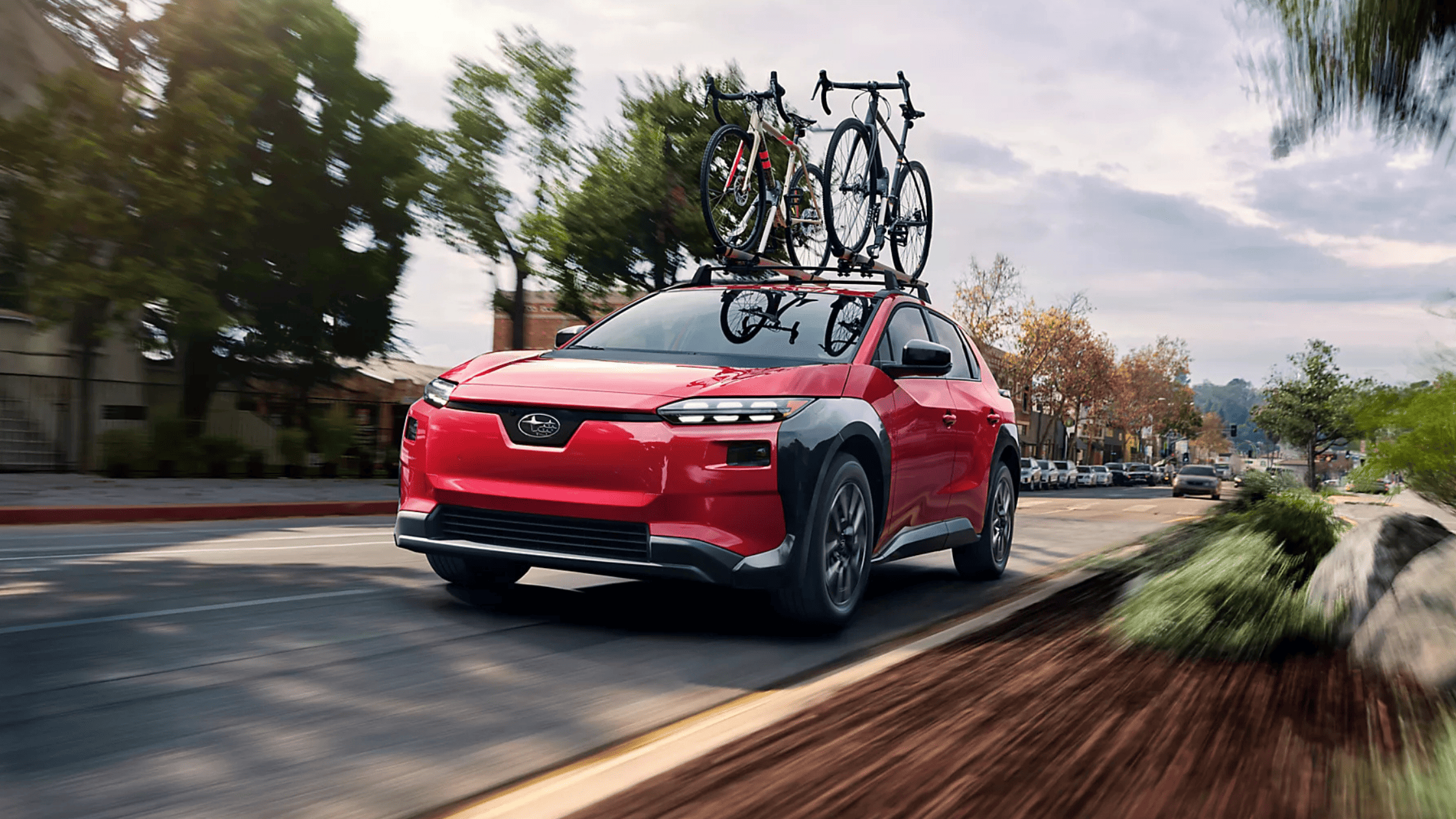
The 2026 Subaru Solterra is a five-door, five-passenger battery-electric SUV equipped with a dual-motor all-wheel-drive system. Subaru offers the vehicle in Premium, Limited, Limited XT, and Touring XT configurations, with combined output reaching 233 horsepower in 2026 Subaru Solterra models and 338 horsepower in 2026 Subaru Solterra XT models. A 74.7-kWh lithium-ion battery supplies energy to the electric drivetrain, while a NACS charge inlet provides access to DC fast charging. The vehicle also combines the Subaru e-Global Platform with four-wheel independent suspension, electronically controlled braking, regenerative braking, and multiple traction-management systems. Its technical package covers electric performance, battery management, charging, chassis engineering, braking, exterior dimensions, passenger accommodations, cargo capacity, and functional equipment.
Electric Powertrain and All-Wheel-Drive Performance
The 2026 Subaru Solterra uses an all-electric drivetrain with AC synchronous permanent-magnet motors positioned at the front and rear. Each motor operates with an integral transaxle and power inverter to propel the vehicle through all four wheels. The independent front and rear motors allow the all-wheel-drive system to manage power distribution electronically. Subaru pairs this arrangement with single-ratio reduction transaxles instead of a conventional multispeed transmission.
Motor Output and Reduction Transaxles
The standard 2026 Subaru Solterra powertrain uses two 87-kW motors and produces a combined output of 233 horsepower. 2026 Subaru Solterra XT models combine a 167-kW motor with an 87-kW motor to generate 338 horsepower. Both configurations use independent electric motors to power the front and rear axles. Their single-ratio reduction transaxles have a ratio of 13.8 to 1 across the model range. This arrangement transfers motor output to the wheels without requiring multiple forward gear ratios.
Symmetrical All-Wheel Drive and X-MODE®
Subaru equips the 2026 Subaru Solterra with Symmetrical All-Wheel Drive featuring Electronic Power-Controlled Variable Power Distribution. The system uses the independent front and rear motors to regulate how electric power reaches each axle. X-MODE® provides selectable Snow and Dirt settings as well as Deep Snow and Mud settings. Grip Control and Downhill Assist Control supplement these modes when the vehicle travels over demanding surfaces or descends grades. Hill-Start Assist also helps control vehicle movement when the driver starts on an incline.
Stability and Traction Management
Vehicle Dynamics Control works with all-wheel, all-speed traction control to manage stability and available grip. Subaru identifies the traction-control function as TRAC within the vehicle's stability system. This equipment monitors all four wheels instead of limiting traction management to a single axle. Active Cornering Assist operates alongside Vehicle Dynamics Control and TRAC as part of the vehicle's handling technology. These systems complement the variable power distribution provided by the dual-motor all-wheel-drive layout.
Battery Capacity and Thermal Management
A lithium-ion battery pack supplies energy to the electric motors in every 2026 Subaru Solterra. The pack contains 104 cells and has a total capacity of 74.7 kWh. It operates at a rated voltage of 391 volts and has a rated capacity of 191 amp-hours. Subaru includes battery cooling and heating systems to help manage battery temperature. This thermal-management equipment forms an integrated part of the battery and electric powertrain package.
Charging and Estimated Driving Range
The NACS charge inlet sits on the vehicle's right fender to provide charging access. Under DC fast-charging conditions, the battery can move from a 10 percent charge to an 80 percent charge in approximately 30 minutes. The Premium has an EPA-estimated electric driving range of 288 miles, while the Limited, Limited XT, and Touring XT have EPA-estimated ranges of 278 miles. EPA efficiency ratings for the Premium reach 131 MPGe in the city, 109 MPGe on the highway, and 120 MPGe combined. The other listed configurations achieve ratings of 128 MPGe in the city, 105 MPGe on the highway, and 117 MPGe combined.
Disclaimer: EPA fuel economy estimates. Actual mileage will vary with driving conditions and your vehicle's condition.
Passenger Space and Cargo Utility
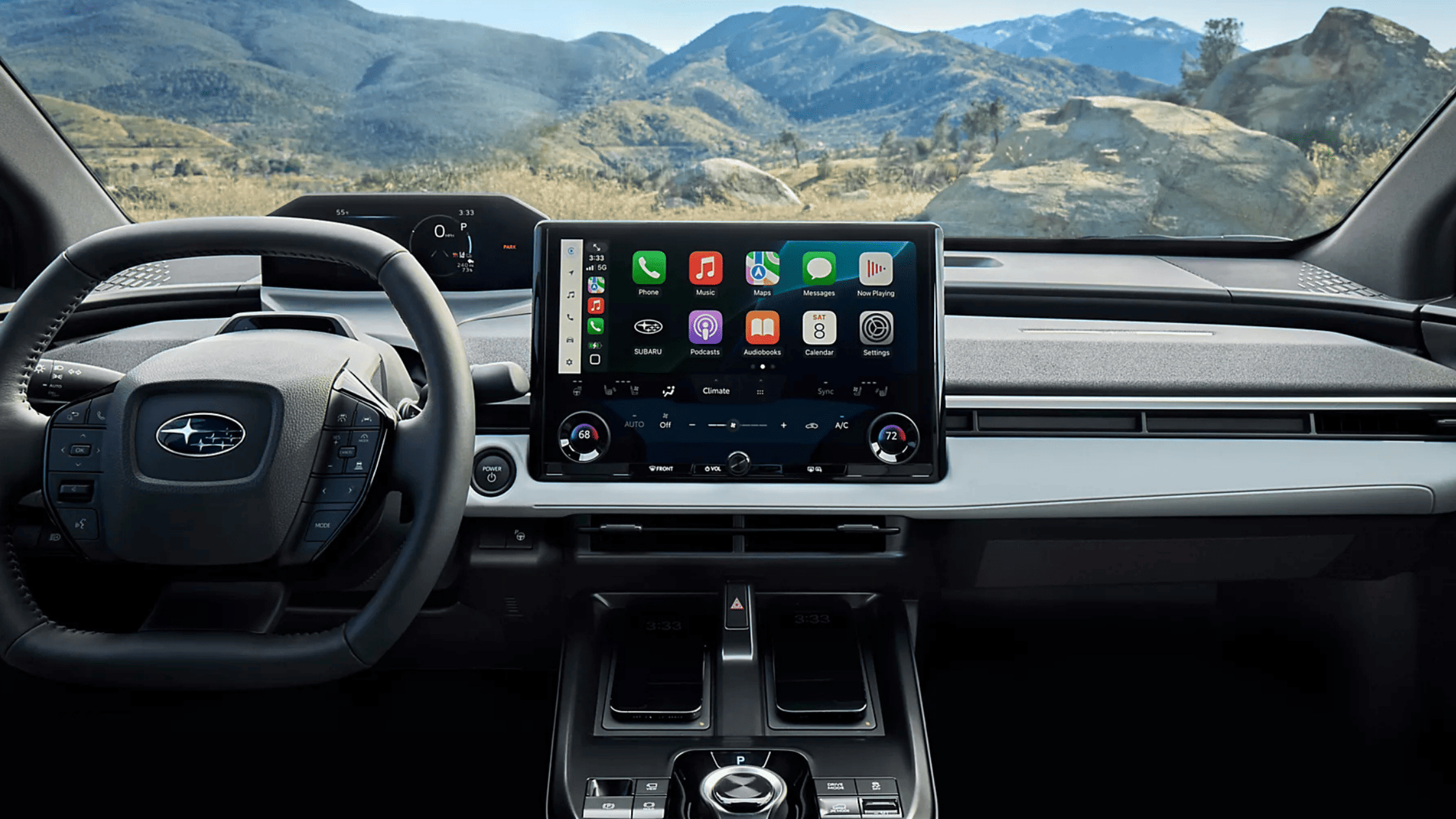
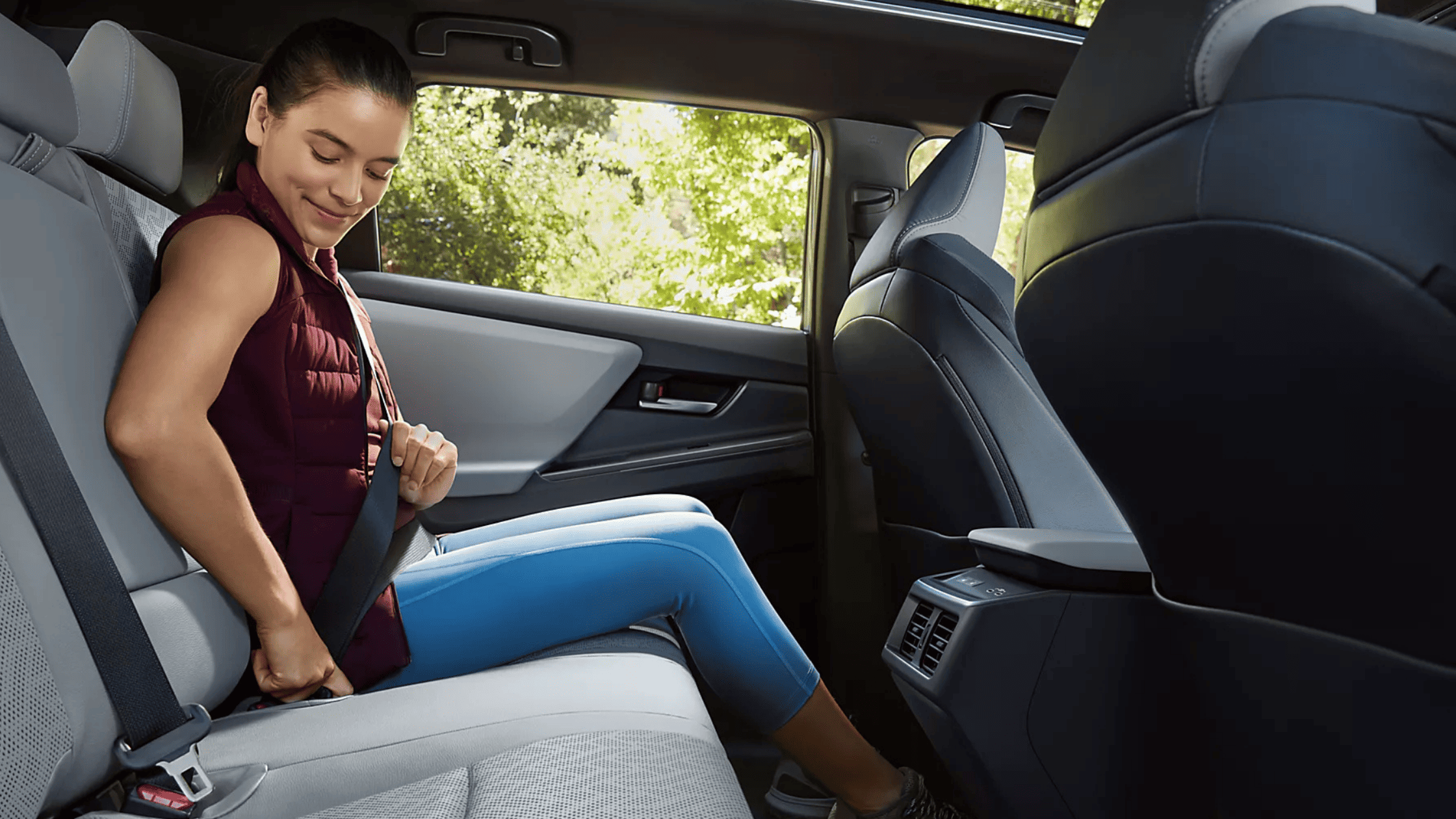
The interior of the 2026 Subaru Solterra provides seating for five passengers across two rows. Published measurements account for differences between models equipped with and without a moonroof. The cabin includes specified headroom, legroom, hip room, and shoulder room measurements for both seating rows. Behind the passengers, cargo capacity and maximum load length change according to the position of the rear seatbacks. An adjustable luggage-compartment deck board also changes the available cargo-area height.
Headroom and Passenger Volume
Models without a moonroof provide 38.8 inches of front headroom and 38.0 inches of rear headroom. Models fitted with a moonroof provide 38.6 inches of front headroom and 37.1 inches of rear headroom. EPA passenger volume measures 97.5 cubic feet without the moonroof. The corresponding passenger volume with a moonroof measures 96.2 cubic feet. These figures document how the moonroof configuration affects published headroom and total passenger volume.
Legroom, Hip Room, and Shoulder Room
Front legroom measures 42.1 inches in the 2026 Subaru Solterra. Rear legroom measures 35.3 inches. Front hip room measures 54.4 inches, compared with 44.8 inches in the rear. Shoulder room measures 58.0 inches for front occupants and 55.0 inches for rear occupants. Together, these measurements describe the available passenger space across both rows.
Cargo Volume and Load Length
EPA cargo volume measures 23.8 cubic feet with the rear seatbacks in their raised position. Folding the rear seatbacks increases the published cargo volume to 63.5 cubic feet. Maximum cargo length measures 38.8 inches when the rear seatbacks remain upright. With the seatbacks folded, maximum cargo length expands to 73.0 inches. The rear cargo opening measures 41.3 inches wide.
Adjustable Cargo-Area Height
The luggage-compartment deck board offers upper and lower positions. Placing the deck board in its upper position provides 29.8 inches of cargo-area height. Moving the board to its lower position increases that measurement to 32.6 inches. The adjustable board allows users to change the cargo-floor configuration within the listed dimensions. This feature complements the foldable rear seatbacks, 63.5-cubic-foot maximum cargo volume, and 73.0-inch maximum cargo length.
Chassis, Suspension, Steering, and Braking
The 2026 Subaru Solterra uses the Subaru e-Global Platform with unitized body construction. Subaru supports this structure with four-wheel independent suspension and electric power-assisted steering. Four-wheel disc brakes provide friction braking, while a regenerative system offers multiple driver-controlled settings. The chassis also accommodates two wheel-and-tire packages according to the selected configuration. Together, these components establish the vehicle's primary handling, steering, ride-control, and braking characteristics.
Four-Wheel Independent Suspension
MacPherson®-type struts form the basis of the 2026 Subaru Solterra's front suspension. The front assembly includes internal rebound springs, lower L-arms, coil springs, and a stabilizer bar. At the rear, Subaru uses a double-wishbone suspension with coil springs and a stabilizer bar. The rear dampers contain internal rebound springs, while steel lower arms carry aerodynamic covers. This layout gives each wheel an independent suspension assembly within the unitized chassis.
Electric Power-Assisted Steering
The steering system uses a quick-ratio, electric power-assisted rack-and-pinion design. Subaru specifies a steering ratio of 14.2 to 1. The steering wheel completes 2.8 turns from lock to lock. The vehicle has a turning circle of 36.7 feet. These measurements define the steering configuration of the 2026 Subaru Solterra and the amount of space required to complete a full turn.
Disc and Regenerative Braking
Electronically Controlled Power-Assisted Braking manages the four-wheel disc brake system. Four-channel, four-sensor anti-lock braking works with Brake Assist and a Brake Override system. The front axle uses 12.9-inch ventilated discs with dual-piston calipers. The rear axle uses 12.5-inch ventilated discs with single-piston calipers. A regenerative braking system adds four driver-controlled modes selected through steering-wheel paddle switches.
Wheels and All-Season Tires
The Premium uses 18-by-7.5-inch aluminum-alloy wheels fitted with aerodynamic wheel covers. Its 235/60R18 all-season tires carry a 103V specification. Limited, Limited XT, and Touring XT models use 20-by-7.5-inch aluminum-alloy wheels. These larger wheels have a machine finish with gray spoke inserts. Subaru equips them with 235/50R20 all-season tires carrying a 100V specification.
Exterior Dimensions and Load Capability
The 2026 Subaru Solterra combines a five-door SUV body with dimensions designed around five-passenger seating and a configurable rear cargo compartment. Its exterior measurements establish the space occupied by the body, wheelbase, and front and rear tracks. The vehicle also provides 8.3 inches of minimum ground clearance. Curb weight varies by configuration because of differences in equipment. Published roof-rail load ratings add functional capacity for carrying equipment within the specified limits.
Body Measurements and Ground Clearance
The 2026 Subaru Solterra rides on a 112.2-inch wheelbase. Its body measures 184.6 inches long, 73.2 inches wide, and 65.0 inches high. The front track measures 63.0 inches, while the rear track measures 63.4 inches. Minimum ground clearance is 8.3 inches. These dimensions apply to the five-door battery-electric SUV body used throughout the 2026 Subaru Solterra model range.
Curb Weight by Configuration
The Premium has a base curb weight of 4,395 pounds. The Limited has a listed base curb weight of 4,475 pounds. The Limited XT also has a base curb weight of 4,475 pounds. The Touring XT increases the listed figure to 4,510 pounds. These figures produce a 115-pound difference between the lightest and heaviest configurations in the specified lineup.
Roof-Rail Capacity
The roof rails have separate dynamic and static load limits. Subaru rates the dynamic load limit at 176 pounds. This rating applies when the vehicle carries a roof load while moving. The static load limit increases to 700 pounds when the vehicle remains stationary. Users should distinguish between these two ratings when determining how the roof rails can support a particular load.
Schedule a Test Ride Today
Visit Subaru of Pueblo nearby Pueblo, CO, to examine the 2026 Subaru Solterra and its battery-electric systems in person. Our team can explain the 233-horsepower and 338-horsepower powertrain configurations, all-wheel-drive technology, regenerative braking modes, and available wheel packages. A test drive provides an opportunity to assess electric power delivery, quick-ratio steering, independent suspension, passenger comfort, and the configurable cargo area. It also allows drivers to become familiar with X-MODE®, traction-management equipment, driver-controlled regenerative braking, and the vehicle's primary safety systems. Contact us to schedule a test drive and evaluate the 2026 Subaru Solterra's performance, handling, technology, comfort, utility, and safety features.