
The 2026 Subaru Forester Wilderness is a five-passenger SUV equipped for travel on paved roads, gravel routes, muddy surfaces, snow, and trails. Its standard capability systems include Subaru Symmetrical All-Wheel Drive, advanced dual-function X-MODE®, a revised Lineartronic® Continuously Variable Transmission, and a 2.5-liter SUBARU BOXER® engine. Wilderness-specific suspension components provide 9.3 inches of ground clearance, while all-terrain tires and underbody protection support operation beyond maintained roads. The cabin combines water-resistant upholstery, flexible cargo space, and an 11.6-inch multimedia touchscreen with wireless smartphone integration. Its technical equipment covers powertrain performance, off-road geometry, structural engineering, towing capability, interior utility, connectivity, driver-assistance technology, and Wilderness-exclusive design details.
Interior comfort, cargo utility, and technology
Inside, the 2026 Subaru Forester Wilderness combines seating for five with configurable cargo capacity and durable trim materials. StarTex® upholstery provides animal-free seating surfaces that resist water and allow easier cleaning. A split-folding rear seat lets occupants adjust the balance between passenger capacity and cargo room. The standard multimedia system consolidates information, audio, climate, and vehicle controls on a vertically oriented display. An available digital instrument cluster adds Wilderness-specific graphics, navigation, and Apple Maps integration.
Seating materials and passenger space
Water-resistant StarTex® upholstery covers the seating surfaces in the 2026 Subaru Forester Wilderness. The animal-free material is designed for easier cleaning. These properties suit a cabin that may encounter moisture or dirt following outdoor activities. Anodized copper-finish accents carry the model's exclusive exterior theme into the passenger compartment. The interior therefore combines distinct visual details with surfaces selected for functional upkeep.
The cabin accommodates up to five people with the rear seatbacks upright. Rear-seat passengers receive 39.4 inches of legroom. This measurement defines the available space in the second row. Standard 60/40-split folding rear seats allow either portion of the rear seating area to fold as needed. The configuration gives occupants flexibility when carrying passengers and cargo during the same trip.
Cargo capacity and adaptable storage
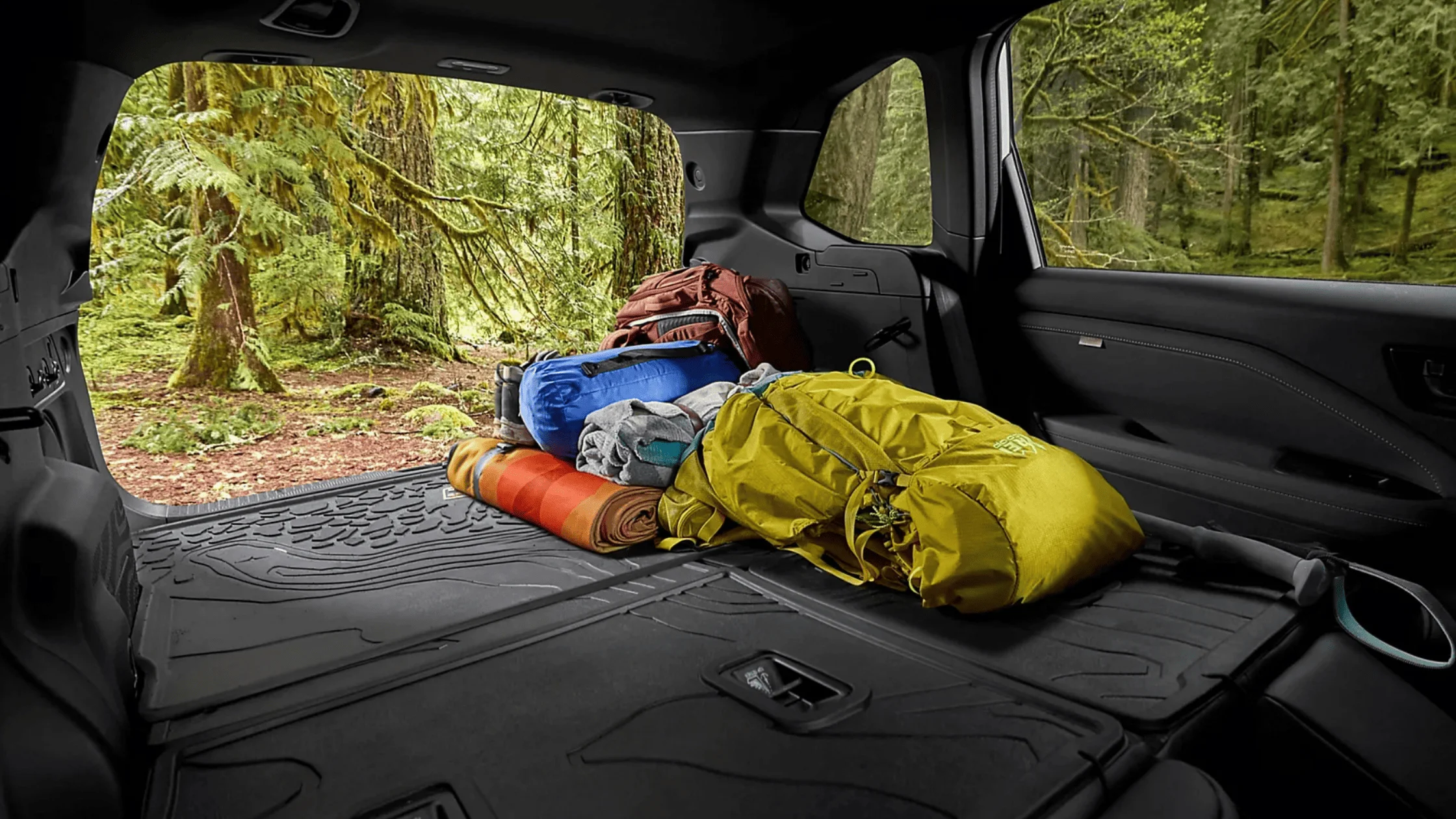
Folding the rear seats provides up to 69.1 cubic feet of usable cargo space. The 60/40 division permits part of the rear seat to remain available while the other section accommodates longer items. Both sections can also fold to make the full stated cargo capacity accessible. This adaptable arrangement changes the cabin layout without requiring seat removal. Returning the seatbacks to their upright position restores seating for as many as five occupants.
The cargo configuration works with the standard roof rails to provide multiple locations for carrying equipment. Interior cargo space keeps items enclosed within the cabin, while the roof rails support loads within their stated limits. The split rear seat allows the interior to accommodate different combinations of passengers and cargo. Water-resistant seating surfaces also simplify cleaning after damp or dirty equipment enters the cabin. These features connect passenger comfort with the 2026 Subaru Forester Wilderness model's equipment-carrying function.
Multimedia and digital displays
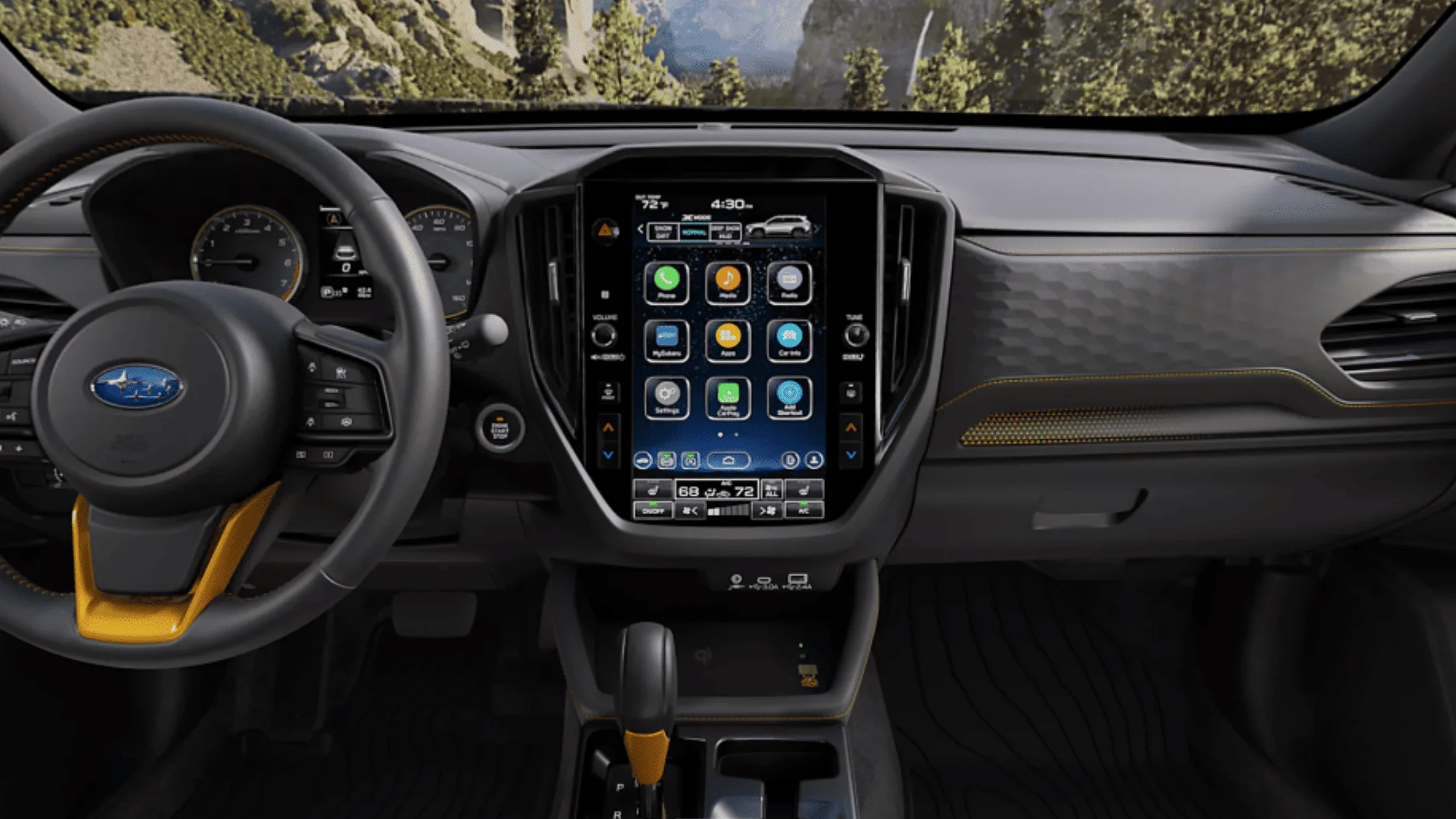
An 11.6-inch Subaru Multimedia Plus system comes standard in the 2026 Subaru Forester Wilderness. Its high-resolution touchscreen supports wireless Apple CarPlay® and Android Auto™ through a full-screen display. The system also functions as a center information display. Combination-meter integration coordinates information between the touchscreen and the driver's instrument area. On-screen controls provide access to audio, climate, and vehicle functions.
The multimedia system includes Bluetooth® hands-free phone operation and audio streaming connectivity. It also provides AM/FM stereo, HD Radio®, SiriusXM® All-Access Radio, SiriusXM® Travel Link®, and a rear vision camera display. Over-the-air update capability allows the system to receive supported software updates. An available 12.3-inch digital gauge cluster adds navigation and Apple Maps integration. The available cluster also includes graphics designed specifically for the 2026 Subaru Forester Wilderness.
Powertrain and all-wheel-drive capability
The 2026 Subaru Forester Wilderness uses coordinated mechanical and electronic systems to manage changing road and trail conditions. Its revised engine delivers power through a continuously variable transmission calibrated for low-speed off-road operation. Standard all-wheel drive manages power distribution while responding to available traction. Dual-function X-MODE® provides dedicated settings for snow, dirt, and mud. These systems work with the upgraded suspension and all-terrain tires to create an integrated performance configuration.
Revised SUBARU BOXER® engine and Lineartronic® transmission
A revised 2.5-liter SUBARU BOXER® engine powers the 2026 Subaru Forester Wilderness. The engine produces 180 horsepower and 178 pound-feet of torque. Subaru makes that torque available at a lower engine speed to support responsive operation. This engine connects to a revised Lineartronic® Continuously Variable Transmission. The transmission uses a shorter final-drive ratio designed to improve low-speed off-road capability.
The shorter final-drive ratio supports controlled movement across difficult surfaces at reduced speeds. This calibration allows the powertrain to address conditions that require deliberate vehicle placement instead of higher-speed travel. The continuously variable transmission manages power delivery without relying on conventional fixed gear changes. Subaru also equips the 2026 Subaru Forester Wilderness with an uprated transmission cooler. That cooling component supports the model's towing capacity of up to 3,500 pounds.
Symmetrical All-Wheel Drive and dual-function X-MODE®
Subaru Symmetrical All-Wheel Drive comes standard on the 2026 Subaru Forester Wilderness. The revised system provides faster center differential lockup to help reduce wheelspin during off-road driving. It also incorporates steering-angle data into its operation. This added input helps improve stability during turn-in and cornering on higher-speed roads. The system therefore responds to both traction requirements and steering behavior as conditions change.
Advanced dual-function X-MODE® adds selectable Snow/Dirt and Deep Snow/Mud settings. Snow/Dirt mode gives the vehicle a dedicated setting for snow-covered or loose surfaces. Deep Snow/Mud mode provides a separate setting for the more demanding conditions identified by its name. Both modes supplement the traction management provided by Subaru Symmetrical All-Wheel Drive. The driver can select the setting that corresponds with the surface being encountered.
Suspension, tires, and trail geometry
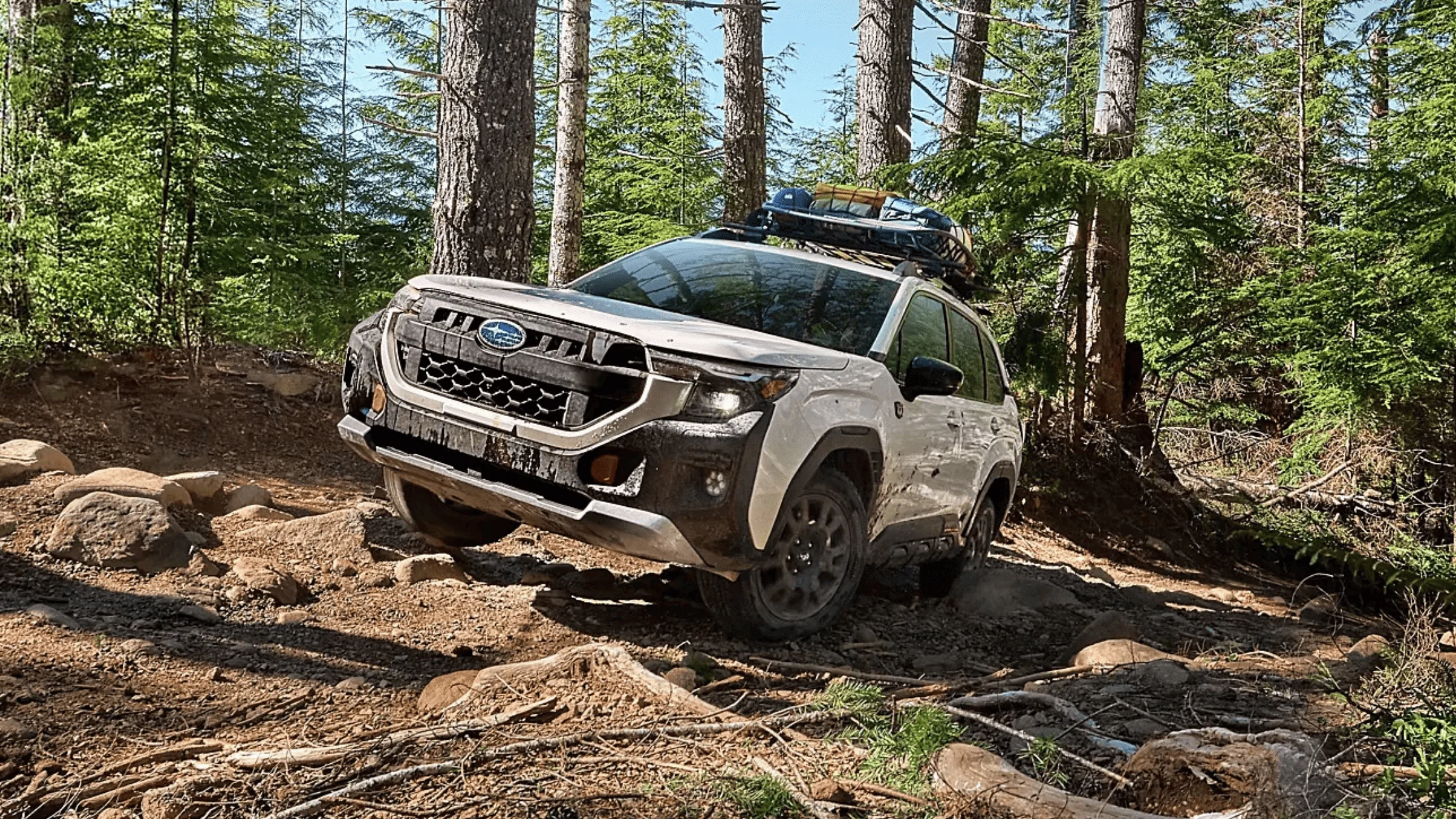
The chassis of the 2026 Subaru Forester Wilderness includes dedicated equipment for increased ground clearance and controlled travel across uneven terrain. Longer coil springs and shock absorbers establish the model's 9.3-inch ground clearance. Subaru tunes the suspension to improve stability and comfort during both on-road and off-road driving. Wilderness-exclusive wheels carry larger all-terrain tires designed for use on muddy or gravel roads. Defined approach, breakover, and departure angles further support the vehicle's ability to negotiate changes in terrain.
Upgraded suspension and ground clearance
The 2026 Subaru Forester Wilderness suspension uses longer coil springs and shock absorbers. These components provide 9.3 inches of ground clearance. The increased ride height creates additional space between the underside of the vehicle and the driving surface. This configuration supports operation on routes with uneven ground and changes in surface height. Subaru also tunes the suspension to improve ride comfort and stability across paved roads and off-road terrain.
Ground clearance represents one part of the model's trail-oriented chassis design. The suspension also manages wheel movement and vehicle stability when the surface changes beneath the tires. Longer springs and corresponding shock absorbers provide the physical basis for the raised chassis configuration. The suspension tuning addresses ordinary road travel along with lower-speed movement away from pavement. Subaru combines these components in one setup developed for the 2026 Subaru Forester Wilderness.
All-terrain tires and exclusive wheels
Larger Yokohama Geolandar® all-terrain tires provide specialized contact with muddy and gravel roads. Subaru mounts these tires on Wilderness-exclusive 17-inch wheels. The wheels feature an anthracite finish that distinguishes the 2026 Subaru Forester Wilderness from other configurations. Their dimensions accommodate the all-terrain tire package selected for this model. The complete wheel and tire assembly works with the raised suspension, all-wheel-drive system, and X-MODE® settings.
Tire performance influences how the vehicle transfers steering, acceleration, and braking inputs to the road or trail. The Geolandar® tires support the 2026 Subaru Forester Wilderness on the loose surfaces specified for the vehicle. Their design complements the electronic control supplied by X-MODE® and the power distribution of Subaru Symmetrical All-Wheel Drive. The exclusive wheel finish also contributes to the model's distinct exterior appearance. Subaru integrates the tires and wheels as functional parts of the complete Wilderness chassis package.
Approach, breakover, and departure angles
The 2026 Subaru Forester Wilderness provides a 23.5-degree approach angle. This measurement defines the angle available when the front of the SUV encounters an incline or obstacle. Its 21-degree ramp breakover angle relates to the vehicle's ability to pass over a crest without contacting the surface beneath its center. The 25.5-degree departure angle applies as the rear of the vehicle moves away from a slope or obstacle. Along with 9.3 inches of ground clearance, these measurements describe key elements of the 2026 Subaru Forester Wilderness model's trail geometry.
Underbody protection adds another functional element beneath the 2026 Subaru Forester Wilderness. This equipment addresses vulnerable lower areas of the vehicle during travel over irregular surfaces. A rear differential temperature sensor also provides additional monitoring during trail use. The sensor tracks the temperature of a component involved in the operation of the all-wheel-drive system. These features complement the raised suspension and defined approach, breakover, and departure angles.
Structure, exterior equipment, and towing function
The 2026 Subaru Forester Wilderness combines its trail hardware with a reinforced structure and utility-focused exterior equipment. An enhanced Subaru Global Platform underpins the vehicle and provides greater torsional rigidity. Standard roof rails accommodate static and dynamic loads within their stated ratings. An upgraded transmission cooler supports the vehicle's towing capability, while exterior protection and lighting address practical needs during off-road travel. Wilderness-specific accents identify the model without replacing the functional purpose of its primary exterior components.
Reinforced Subaru Global Platform
Subaru uses a new full inner-frame construction for the 2026 Subaru Forester Wilderness. Stronger welding techniques and additional structural adhesive contribute to a 10 percent increase in torsional rigidity. The amount of structural adhesive increases from approximately 26.2 feet to 88.5 feet. These construction changes create a more rigid foundation for the body, suspension, and passenger compartment. Subaru associates the platform updates with improved dynamic performance, a smoother ride, and a quieter cabin.
Greater torsional rigidity helps the structure resist twisting forces as the vehicle moves. This characteristic applies when the suspension encounters uneven surfaces or the body experiences changing loads. A more rigid platform also gives the suspension a stable mounting foundation. The resulting ride and cabin improvements support passenger comfort during routine driving and extended trips. These structural revisions operate beneath the visible Wilderness equipment and contribute to the vehicle's overall driving behavior.
Roof rails and trail-focused exterior details
Standard roof rails provide an 800-pound static load capacity rating. Their dynamic load rating is 176 pounds. The static figure applies while the vehicle remains parked, while the dynamic figure applies when the vehicle is moving. These separate ratings define how the roof system accommodates loads under different operating conditions. The rails increase exterior utility while maintaining the vehicle's trail-oriented configuration.
LED hexagonal fog lights provide a distinct lighting element at the front of the vehicle. Expanded anodized copper-finish accents appear across the exterior, including the front and rear bumper tow-hook covers. These details give the 2026 Subaru Forester Wilderness a model-specific visual identity. Underbody protection adds a functional component beneath the exterior design. The combination of lighting, protective equipment, roof rails, and unique finishes differentiates the Wilderness configuration while supporting its intended utility.
Cooling and towing equipment
The 2026 Subaru Forester Wilderness provides a towing capacity of up to 3,500 pounds. An uprated transmission cooler supports this capability. The cooler helps the transmission manage the thermal demands associated with towing. Subaru pairs this component with the revised Lineartronic® CVT and its shorter final-drive ratio. The towing configuration therefore incorporates powertrain equipment that also supports controlled operation at lower speeds.
A rear differential temperature sensor provides further monitoring during demanding operation. Its location relates directly to the all-wheel-drive hardware responsible for transferring power through the vehicle. This equipment supplies temperature information for the rear differential during trail use. The sensor and transmission cooler address separate areas of drivetrain temperature management. Both features contribute to the 2026 Subaru Forester Wilderness model's functional capability.
Visit Subaru of Pueblo to Schedule a Test Ride
Schedule a test drive with Subaru of Pueblo nearby Pueblo, CO, to experience the 2026 Subaru Forester Wilderness and its integrated capability systems. Our team can demonstrate the operation of the 2.5-liter SUBARU BOXER® engine, revised Lineartronic® CVT, standard Symmetrical All-Wheel Drive, and dual-function X-MODE®. A test drive also provides an opportunity to assess the raised suspension, all-terrain tires, seating comfort, multimedia interface, and available digital gauge cluster. We can review the cargo configuration, towing-related equipment, EyeSight® Driver Assist Technology, and Wilderness-specific functional features during your visit. Contact our team to arrange a time to evaluate the vehicle's performance, technology, comfort, handling, and safety equipment.